

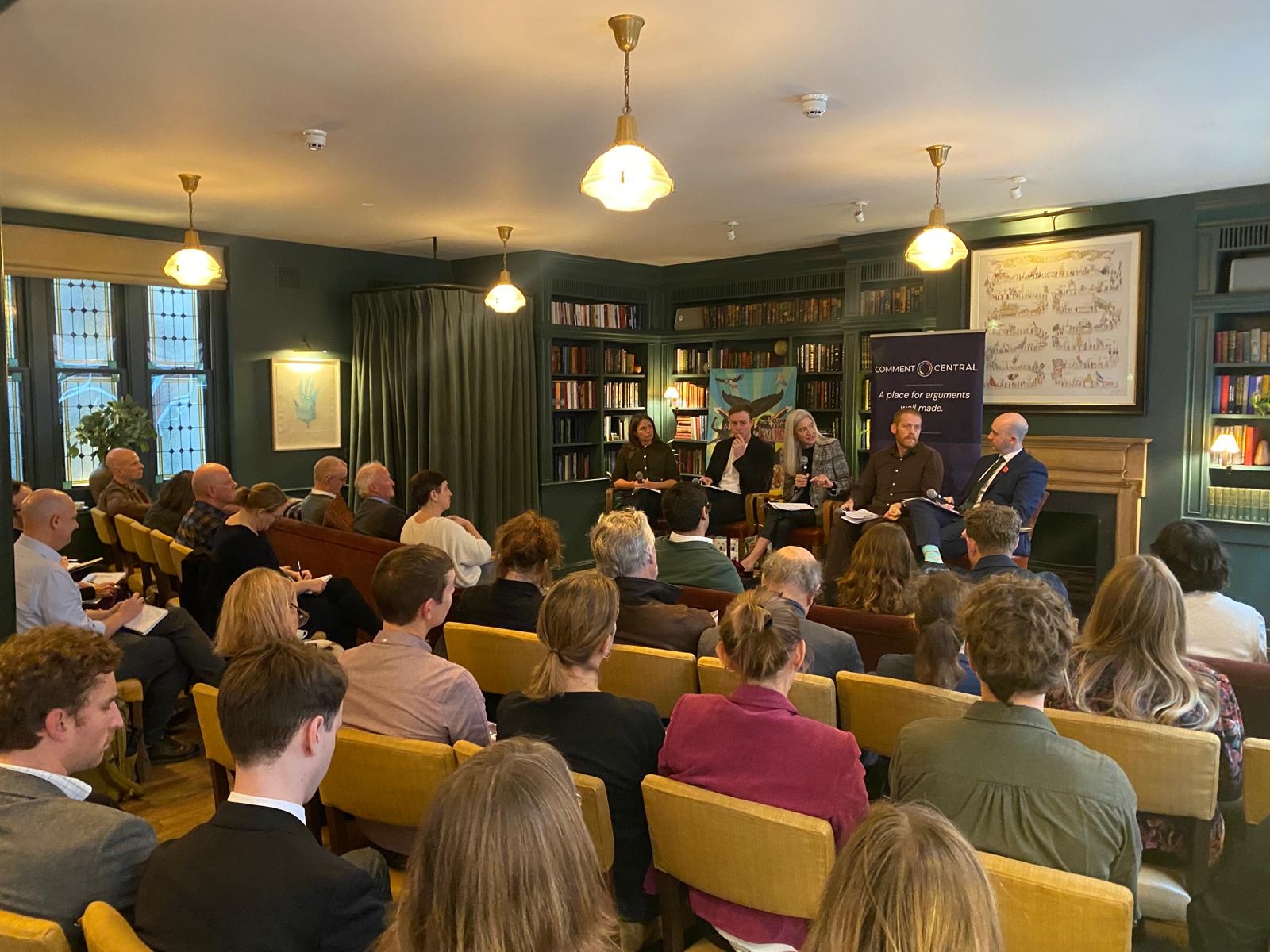
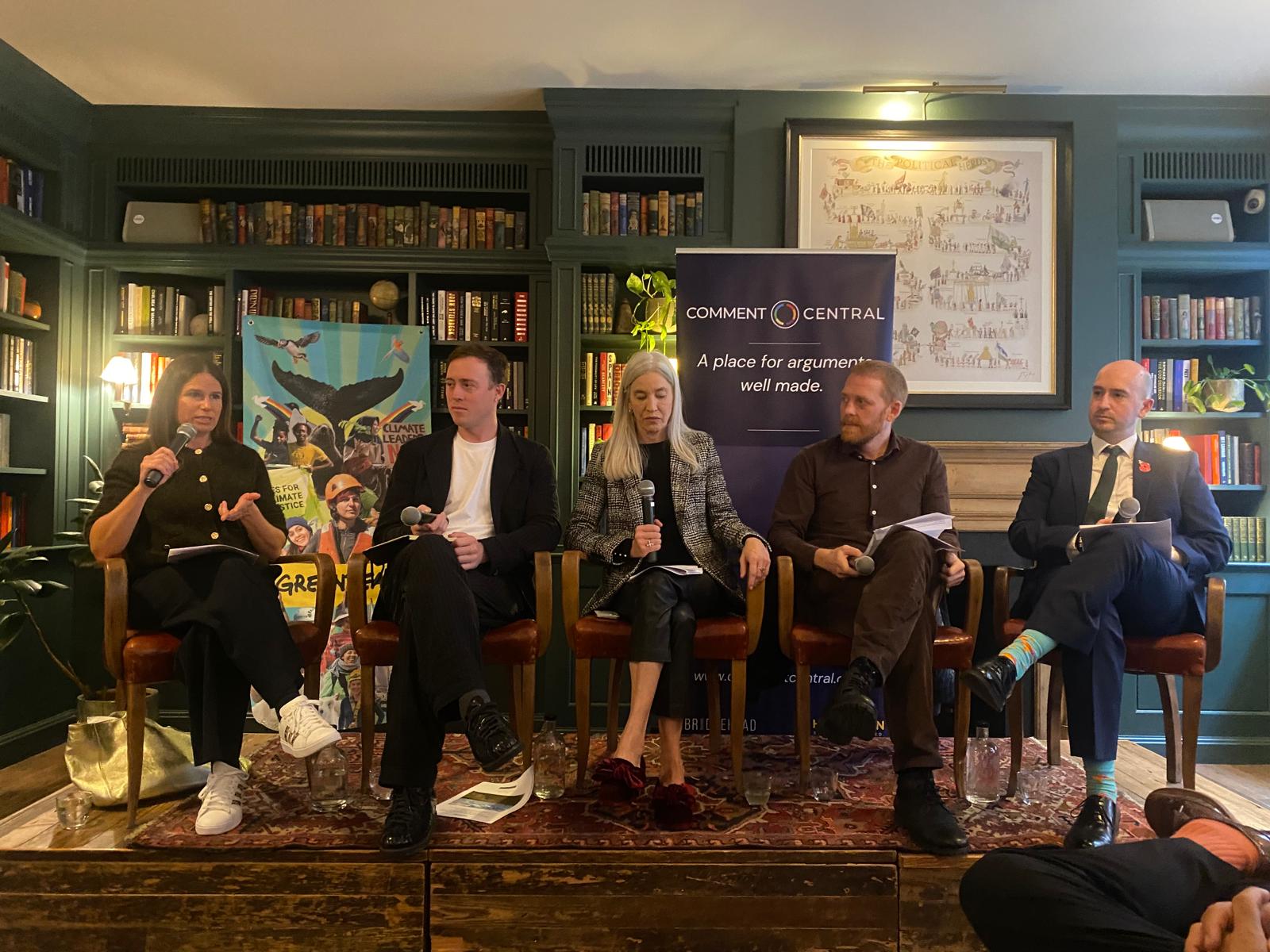
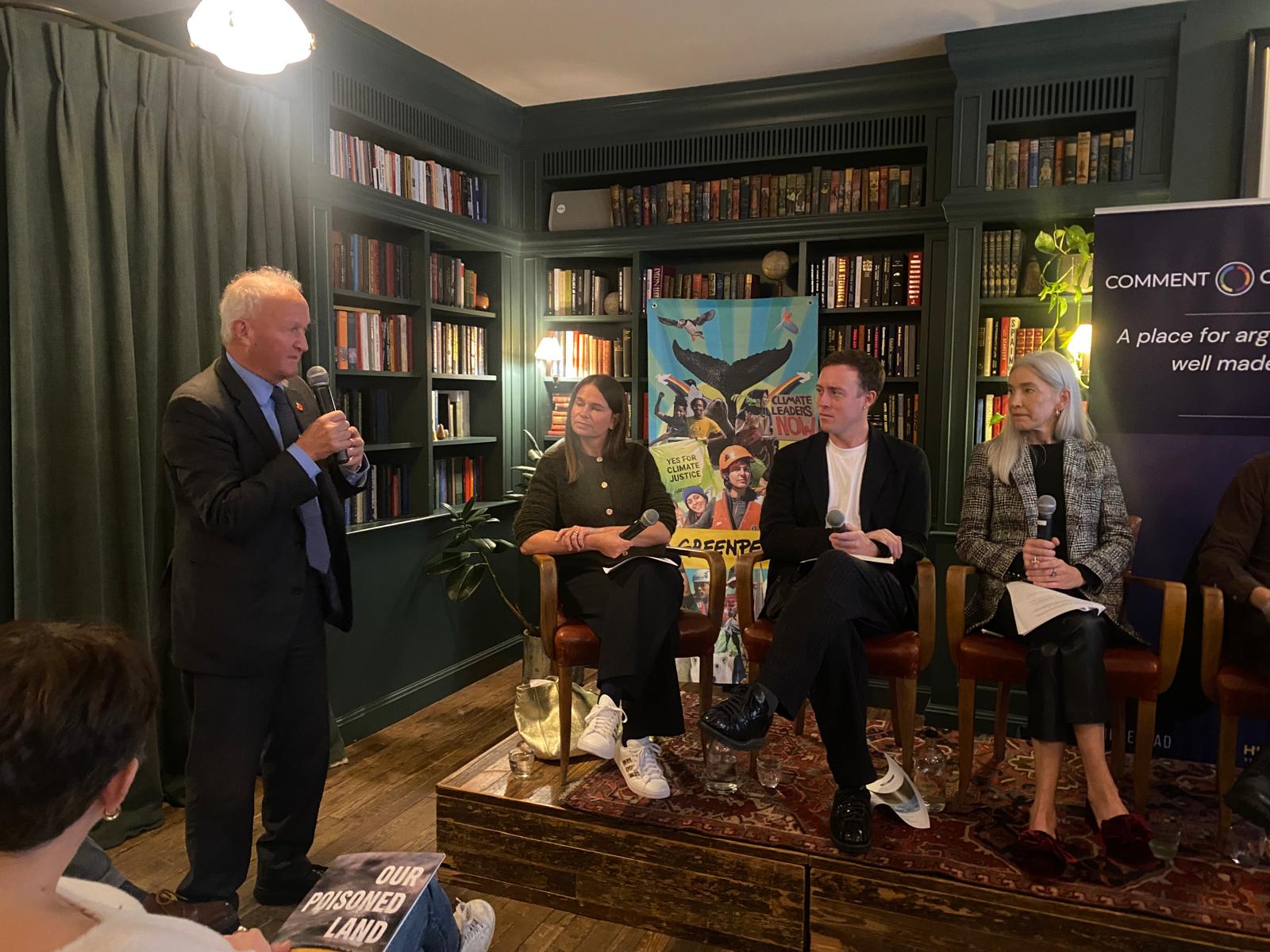
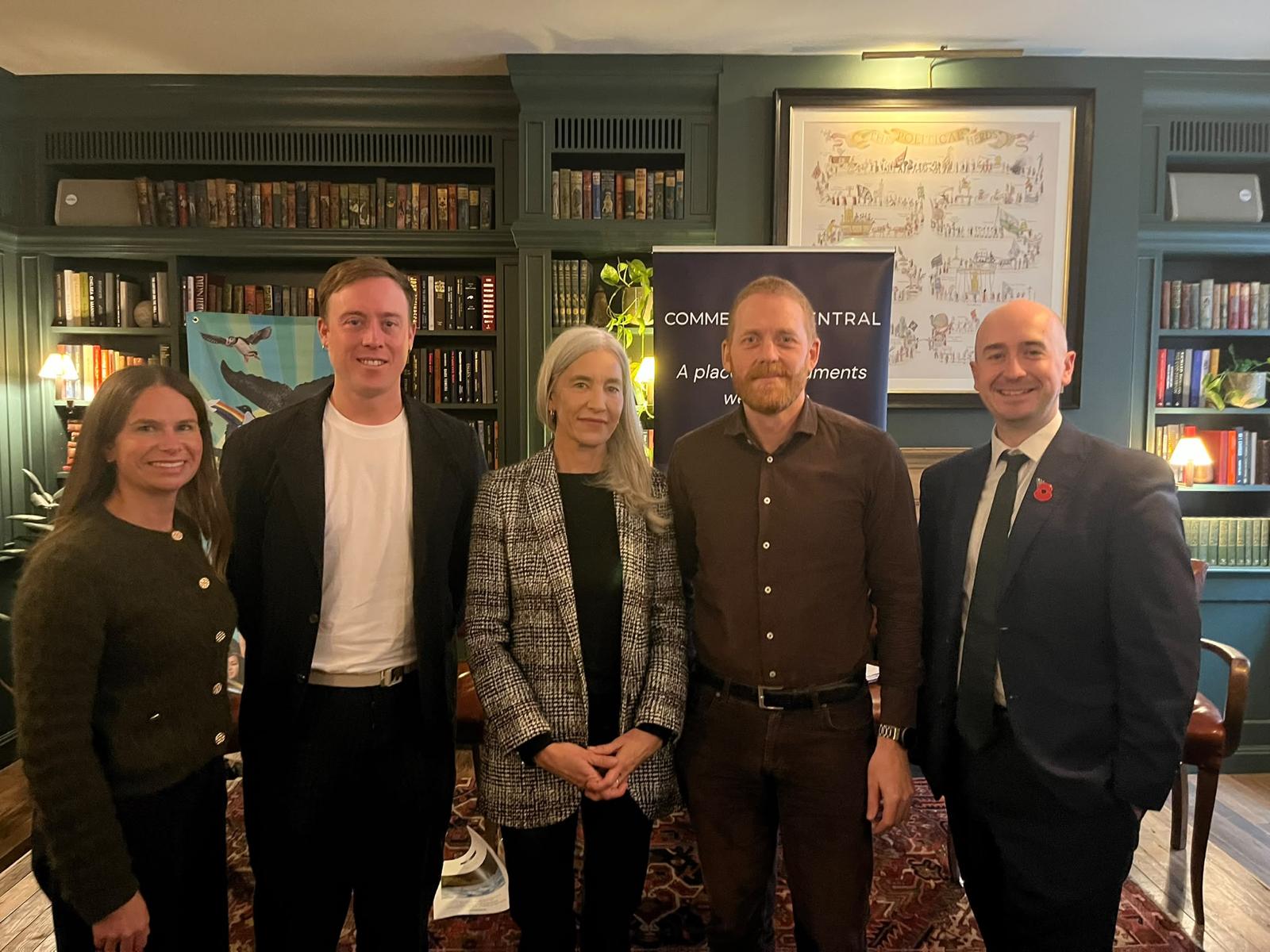
Higginson Strategy organised a Comment Central Spotlight Breakfast for Greenpeace UK on Wednesday 4 November in the heart of Westminster. After a year of drought, the worst harvest on record and rising food prices, the panel asked how Britain can future-proof its farming and restore nature.
Higginson Strategy Associate Director Cordelia Kretzschmar chaired the session, which brought together Will McCallum, Co-Executive Director of Greenpeace UK; Anna Biesty of Deepdale Farm, Norfolk, representing the Nature Friendly Farming Network; Prof. Paul Behrens, British Academy Global Professor at the University of Oxford; and Ben Goldsborough MP, Labour MP for South Norfolk and member of the EFRA Select Committee.
The discussion reflected on Greenpeace UK’s report Our Poisoned Land, which found that 102 individual pesticides are used across just seven British food staples. The report calls on the Government to support farmers to halve the use, impact and toxicity of pesticides and synthetic nitrogen fertilisers by 2030, and to cut them by 80 per cent by 2040.
To open the session, Mr McCallum said the rhetoric from government had caught up with a stark reality, meaning that, for once, government, Greenpeace and the NFU are “singing from the same hymn sheet.” campaigners no longer had to argue over whether nature matters and could move straight to the opportunity. Cutting chemical inputs, he argued, is one of the quickest ways to build resilience. Halving them by the end of the decade could deliver results within this parliament. Targeted SFI payments, keeping out imported food grown with pesticides banned in the UK, and treating EU pesticide standards as a baseline rather than a ceiling were all steps the Government could take within six months, he said.
Ms Biesty described how bare, structureless soil on her family’s farm gave way in the floods of 2020, sending water and soil down a kilometre-long slope and into the village below. After the farm changed its practices, heavier rain in 2023–24 flooded the villages around them while theirs stayed dry. Going organic cut her wheat yields from around seven tonnes per hectare to two, but with better prices and input costs massively reduced, her bottom line is “a lot better than it was in 2019.” But she was frank about the bureaucratic barriers facing farmers: the first-come, first-served SFI application window was among the most stressful hours of her life; and a landscape recovery bid for North Norfolk has waited nearly 18 months for a decision. “The inefficiencies are absolutely staggering,” she said.
Mr Goldsborough said the oversubscribed SFI scheme pointed to a deeper problem that even the best-run scheme could not fix: there is no profitability in farming. He backed an end to first-come, first-served applications, called for certainty that policy will not keep changing, and said schemes must be “designed by farmers for farmers” rather than built around a Whitehall assumption of a stable internet connection and a nine-to-five day. He also warned that replacing SFI with private finance without clear rules could become a corporate “dash for cash” and said he was “scared to death” about what happens to upland farming when SFI ends.
Prof. Behrens warned that farmers are losing income just as input costs rise, with the IGD expecting food inflation of around 6 per cent next year and the risk of it climbing much higher. Describing resilience as headroom, he argued that the debate must look beyond the farm gate. With over half of UK cropland growing animal feed, a shift towards more plant-rich diets would give the system room to absorb shocks. Forthcoming research from his team suggests overall farm incomes could rise because of this shift. Serving healthier, locally sourced food through public procurement in the NHS and schools, as Denmark has done, was a first step everyone could agree on, he said.
Questions from the floor covered the lobbying power of pesticide companies, with Mr McCallum suggesting higher taxes on chemical companies could help fund the transition. The audience also reflected on food imported to lower standards; whether agricultural colleges are preparing new farmers for nature-friendly methods; and the difference between food security and self-sufficiency.
Read Greenpeace UK’s Our Poisoned Land report: https://www.greenpeace.org.uk/resources/our-poisoned-land/
Will McCallum “Reducing chemical inputs is one of the quickest ways you can increase resilience and increase the benefits of the natural world within quite a short timescale. By halving fertiliser and pesticide inputs by the end of this decade, we could start to see huge results within this parliamentary term.”
Anna Biesty “Somebody said to my mum, ‘Why is our village so dry?’ And she could honestly say that that was a change in our farming practices. It has allowed us to sleep better at night.”
Ben Goldsborough MP “If we get profitability, our farmers are the best people at managing our land for better biodiversity increases, but they won’t do it for free, and we need to own up to that as a country.”
Prof. Paul Behrens “We are expecting chronic food price inflation. […] So, how do we keep these prices down? I think it comes back down to these plant-rich shifts.”
Cordelia Kretzschmar “The ambition is there. The question is whether policy catches up with it before the next drought, or the next flood.”